
Care Coordination: Why memos lighten the daily life of technicians
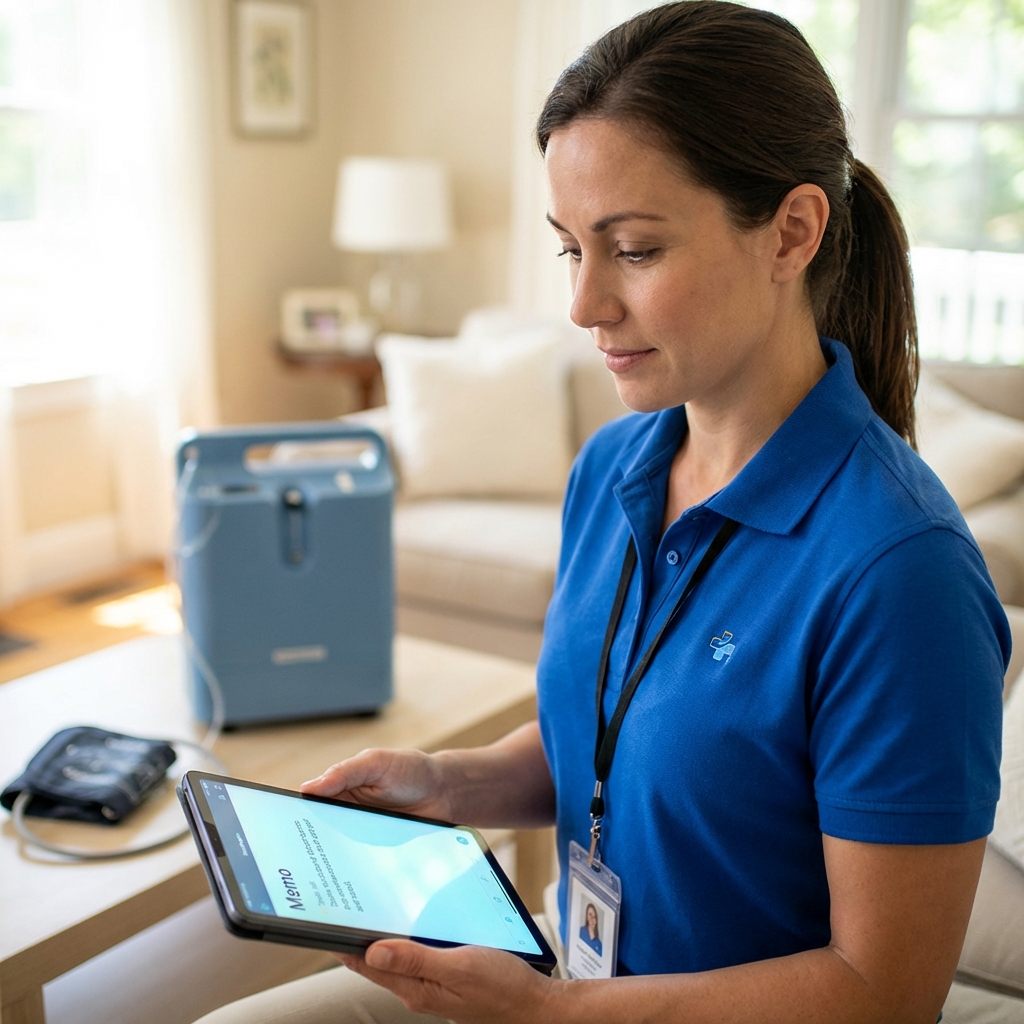
The job of a technical practitioner within a Home Healthcare Provider is demanding. These professionals responsible for installing, monitoring, maintaining, and removing medical devices must balance technical expertise, patient pedagogy, and vigilance on the road.
In this dense daily life, a major nuisance saps their energy: incessant phone interruptions for coordination details. “Did you stop by Mr. Smith’s?”, “What’s the code for Mrs. Jones?”. It’s not just a waste of time. It is a fragmentation of attention that generates deep mental fatigue and real risks (accidents, errors).
The hell of forced interruption
Wanting to settle everything by immediate voice call is toxic for mental load:
- For the practitioner: The call cuts a technical gesture, an explanation to the patient, or disrupts driving. The brain must constantly make efforts to refocus.
- For the coordinator: They often call to reassure themselves, transferring their stress to the field.
This “reactive” mode of operation keeps everyone in a state of unnecessary nervous tension.
The calm of the Contextual Memo
The solution to regain serenity is to move from interruption logic to contextual notification logic. Information must not assault, it must be available at the right time.
With the contextual memo, information is attached to the patient, not the moment. When arriving at the patient’s home, key information is displayed for the practitioner:
- “Warning: Difficult dog.”
- “Info: Therapeutic adherence to monitor.”
- “Logistics: Pick up old equipment.”
The practitioner did not need to call, ask, or search their memory. The info is there, calmly, when needed.
The report without mental load
After the visit, the stress of “having to report” often adds to physical fatigue. The practitioner should no longer have to call to “debrief”. They must be able to unload their mind immediately. A short transcribed voice memo or a quick note (“Installation OK - Nothing to report”) allows closing the intervention psychologically. The information is transmitted, traced, the office will process it in due time.
Human benefits for the PSAD structure:
- Noise and stress reduction: Fewer rings, more calm.
- Regained autonomy: The practitioner feels equipped and supported, more “guided”.
- Collective serenity: Knowledge is in the system, shared, and no longer anxiously held by individuals.
The pivotal tool: The intelligent call manager
To get out of the urgency culture, you need the right tools. Sticky notes on the dashboard or incessant calls are no longer enough. A tool is needed that links the call and the note, without friction.
This is what MemoCall Pro offers. The application acts as a soothing filter between the field and the office.
- Before: It gives context (Overlay) so as not to be caught off guard.
- During: It keeps the info.
- After: It allows emptying one’s “mental bag” with a quick note.
Adopting this approach means choosing to protect the attention and energy of your technical teams, so that they remain focused on their primary mission: care and support.