
Small Business Loyalty Program | MemoCallPro
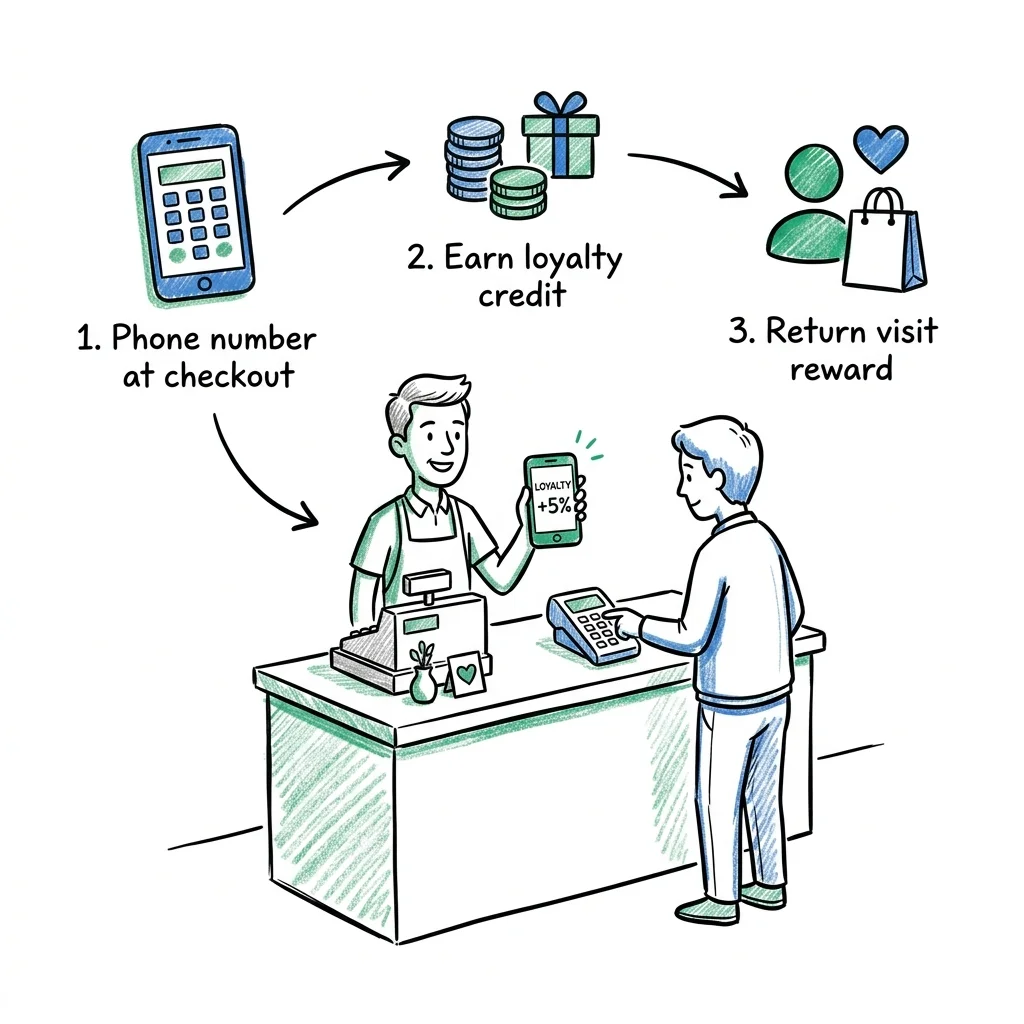
To start a loyalty program for a small business, choose the customer behavior you want to encourage, set a reward your margins can support, and make participation easy at checkout. Then record purchases consistently and track whether customers return and use their rewards.
For a local shop, this can be straightforward: identify the customer by their phone number, record their purchase, and add a percentage of the amount paid to a loyalty balance they can use on a future visit.
You do not need to begin with complicated membership tiers or a customer app. You need a clear offer, a reliable way to recognize customers, and a routine that works when your shop is busy.
This guide explains how to build that routine, with practical examples using Loyalty by MemoCallPro, an Android solution for managing customer loyalty from your phone.
1. Decide what your loyalty program should achieve
“Build customer loyalty” is a useful ambition, but it is too broad to measure. Start with one specific objective.
A grocery shop might want first-time shoppers to make a second visit. A salon might want existing clients to book their next appointment. A neighborhood retailer might want occasional customers to become regulars.
| Business objective | Behavior to encourage | What to measure |
|---|---|---|
| Turn new shoppers into returning customers | A second purchase | Percentage of new members who return within a defined period |
| Encourage more frequent visits | Shorter gaps between purchases | Visits per customer and time between visits |
| Increase spending per visit | A larger purchase | Average transaction value |
| Reconnect with existing customers | A return after a period of inactivity | Customers returning after an invitation |
| Make rewards useful | Customers using their balance | Reward redemptions and balance remaining |
Choose one primary objective for your first review period. You can still monitor the others, but avoid changing several rules at once: it becomes difficult to understand what helped.
Before launch, record a baseline using whatever reliable sales and customer information you already have. If you cannot identify repeat customers yet, use the first weeks to establish that baseline.
2. Choose a loyalty program customers can understand
The reward should be easy for your team to explain and easy for customers to remember.
Common small business loyalty programs include:
| Program type | How it works | What to consider |
|---|---|---|
| Stamp or visit program | Customers earn a reward after a set number of qualifying purchases | Define what counts as a qualifying visit |
| Points program | Purchases earn points that can be exchanged for rewards | Make the value of points clear |
| Spend-based loyalty credit | A percentage of the amount paid becomes credit for a future purchase | Choose an affordable rate and explain redemption |
| Membership tiers | Benefits increase with spending or activity | Keep qualification rules understandable |
These are different approaches, not a list of features offered by every loyalty application.
Loyalty by MemoCallPro uses a configurable reward rate to build a customer’s loyalty balance. For example, with a 5% rate:
A customer pays €50 and earns €2.50 in loyalty credit for a future purchase.
This is store credit for your business, rather than cash transferred to the customer’s bank account.
An amount expressed in currency gives staff a simple way to explain the benefit:
“You have €2.50 available to use on your next purchase.”
The 5% rate is an example, not a recommended rate for every business.
3. Set a reward rate your margins can support
A loyalty program needs to work for both the customer and the business. A generous offer that absorbs too much of your margin will be difficult to maintain.
Consider the full operating cost:
- The loyalty software subscription.
- The rewards customers redeem.
- Any additional communication costs.
- The time spent enrolling customers and managing transactions.
For planning, estimate how much credit your chosen rate would create.
| Monthly qualifying paid sales | Illustrative reward rate | Loyalty credit earned |
|---|---|---|
| €2,000 | 2% | €40 |
| €2,000 | 3% | €60 |
| €2,000 | 5% | €100 |
These figures assume the rate applies to all qualifying paid sales shown. Credit earned is not necessarily redeemed in the same month, but it represents rewards customers may use later.
Check this amount against the margin available in your business. A food retailer and a service provider may have very different room for rewards.
Be clear about purchases made with loyalty credit
Customers should understand whether new rewards are calculated before or after existing credit is used.
In the supplied Loyalty by MemoCallPro sale workflow, new rewards are calculated on the amount remaining to pay after the loyalty deduction.
For example:
| Transaction detail | Amount |
|---|---|
| Purchase total | €30.00 |
| Existing loyalty credit used | €2.50 |
| Amount to pay | €27.50 |
| New credit earned at 5%, rounded to cents | €1.38 |
The customer uses their previous €2.50 balance and earns €1.38 from the new payment.
Explain this rule plainly. It is easier to build trust when the calculation matches what the customer expects.
4. Write simple rules before you launch
Your staff should not have to invent answers at the counter.
Decide:
- Which purchases qualify for rewards.
- How much credit customers earn.
- When they can redeem it.
- Whether any exclusions apply.
- How returns and canceled purchases affect rewards.
- Whether rewards expire.
- What happens if a customer changes their phone number.
Only announce rules your chosen system and operating process can support. For example, do not promise automatic expiration or product-specific exclusions without checking that they can be managed.
A short explanation might read:
“Earn 3% in loyalty credit on qualifying purchases. Give us your phone number when you shop, and we will add your reward to your balance. You can use your available credit on a future purchase.”
Adapt that wording to your actual rate and conditions.
5. Make joining easy at the counter
Enrollment is part of the shopping experience. If it requires a long form or several unfamiliar steps, it becomes harder to explain during a busy period.
With Loyalty by MemoCallPro, the merchant manages the program from an Android phone. Customers can be identified by their phone number, without installing a separate Loyalty app.
An optional digital loyalty card in Apple Wallet or Google Wallet gives customers another way to identify themselves: they can present the card’s QR code at the counter.
The distinction is simple:
- The merchant uses the application to manage the program.
- The customer uses their phone number or presents their Wallet card.
A useful checkout invitation is:
“Would you like to collect loyalty credit with us? Your phone number is enough, and you do not need to download an app.”
Confirm the number when creating the customer record. Consistent identification helps keep purchases and rewards attached to the correct person.
Explain how you will use their details, and treat promotional messages as a separate customer preference from joining the loyalty program.
6. Use the same process for every purchase
A loyalty program becomes dependable when staff follow a repeatable routine.
Identify the customer
Ask for their phone number or scan their Wallet card. Retrieve their customer record and available balance.
This works during an in-store visit. The customer does not need to call your business to participate.
Record the sale
Enter the purchase amount. Loyalty calculates the reward using the rate you have configured.
The automatic calculation follows the sale you record; it does not mean the application independently detects every transaction made through your payment terminal.
Apply available rewards
If the customer wants to redeem their available credit, apply the loyalty deduction and check the remaining amount to pay.
Confirm the transaction and explain the updated balance.
Keep the transaction history
A recorded history helps you answer practical questions:
- When did the customer last shop?
- What purchases are recorded?
- What balance is currently available?
- Has the customer used a reward?
Recording a sale and calculating its loyalty balance are separate from processing a bank-card payment. Keep your usual payment process clear for staff.
7. Show customers the benefit of returning
A program is easier to use when the benefit is visible during normal conversations.
At the end of a sale, tell the customer what they have earned:
“You earned €1.20 today. Your balance is now €4.80 for a future purchase.”
When they return, remind them of an available reward:
“You have €4.80 in loyalty credit. Would you like to use it today?”
This gives the program a practical role in the customer relationship.
An example for a neighborhood grocery shop
A customer buys €40 of groceries. At an illustrative 3% rate, they earn €1.20 in loyalty credit.
On their next visit, the merchant retrieves their record using their phone number. The customer can use the available balance or continue building it according to the program’s rules.
The experience remains familiar: choose products, identify the customer, record the purchase, and explain the reward.
Extend recognition to telephone orders
For businesses that also take orders or bookings by phone, MemoCallPro adds another opportunity to recognize an existing customer.
With the associated caller-context functionality configured, the customer’s information can appear when they call, helping the merchant personalize the conversation.
For example:
“Hello Sophie. Would you like your usual order? You also have loyalty credit available for your next purchase.”
Phone recognition complements the in-store program. It is not a condition for earning or redeeming rewards.
8. Track statistics that help you make decisions
The purpose of loyalty statistics is to understand participation, reward use, and customer behavior—not simply to display a growing number of members.
Loyalty by MemoCallPro includes a loyalty dashboard, customer balances, transaction records, a daily journal, and a top-customer view. Its broader product presentation also includes customer visit and purchasing insights.
Start with the figures available in your installed version. Some of the measures below may require a separate calculation or comparison across reporting periods.
Outstanding loyalty balance
This is the credit customers still have available.
It helps you understand the scale of rewards that may be redeemed in the future. A rising balance can mean customers are earning rewards, but it does not prove they are returning to use them.
Read it alongside redemptions and repeat visits.
Rewards redeemed
Redemptions show that customers are using the program’s benefits.
Track them over a consistent period, such as a month, and investigate sudden changes. A low level of redemption may suggest customers do not know their balance or do not understand how to use it.
Check whether your report shows gross rewards earned and redeemed separately or the net change in balances. Those figures answer different questions.
Customer visits and purchase frequency
Where visit history is available, examine how often customers return.
For your own analysis:
Purchase frequency = recorded purchases ÷ purchasing customers
Use the same reporting period and customer population in both parts of the calculation.
A customer who normally visits weekly should not be interpreted in the same way as someone who typically shops once every two months.
Average transaction value
Calculate:
Average transaction value = recorded sales value ÷ recorded transactions
Be consistent about whether sales value means the purchase total before loyalty deductions or the amount paid after deductions.
Otherwise, a month with more reward redemptions may appear to have smaller baskets even when customers bought the same amount of goods.
Repeat purchase rate
For a defined period:
Repeat purchase rate = customers with at least two purchases ÷ customers with at least one purchase × 100
For example, if 40 out of 100 purchasing members make at least two purchases during the month, the repeat purchase rate for that group is 40%.
This is an illustrative calculation, not a reported MemoCallPro customer result.
Busy periods and inactive customers
Day-of-week and time-of-day patterns can help you understand when recorded purchases happen. Remember that recorded transaction times are not necessarily a measure of everyone entering the shop.
Customer history can also help you identify people whose usual purchasing pattern has changed. A gap between visits is a reason to investigate, not proof that someone has stopped buying from you permanently.
| Metric | Question it helps answer |
|---|---|
| Outstanding balance | How much reward credit remains available? |
| Rewards redeemed | Are customers using their benefits? |
| Repeat purchase rate | How many purchasing customers return? |
| Purchase frequency | How often do customers buy? |
| Average transaction value | How much is spent per transaction? |
| Time since last purchase | Which customer relationships may need attention? |
| Recorded sales by day or hour | When does recorded purchasing activity peak? |
Compare similar periods and account for holidays, promotions, and changes in opening hours. Members may already be your most loyal customers, so higher spending among members alone does not prove the program caused it.
9. Keep the software budget proportionate
A small business loyalty program should leave room in the budget for the rewards themselves.
Loyalty by MemoCallPro is offered at €5.99 per month, with the merchant managing the program through MemoCallPro on Android.
When comparing solutions, check what each subscription includes and whether additional modules, messaging charges, equipment, or integrations are needed for your intended use.
As a budgeting example, choosing software that costs €30 less per month leaves:
€30 × 12 = €360 per year
That budget could support customer rewards, a small appreciation event, or a gift basket promotion.
The saving is a budget choice, not a guarantee of increased sales. What matters is whether the software supports your daily workflow and whether customers value the program you create.
10. Launch a pilot and review what happens
Start with a manageable launch rather than introducing several tiers and offers at once.
Before launch
Choose the objective, reward rate, and redemption rules. Configure the program and test a complete purchase and redemption.
Check that staff can explain the offer and retrieve the correct customer.
During the first week
Invite customers consistently. Note the questions they ask and any steps that slow down checkout.
Check that purchases and balances are recorded correctly.
Over the following weeks
Monitor enrollment, recorded transactions, available balances, and redemptions. Look for returning customers and compare their behavior over an appropriate period.
For a grocery shop, a month may capture several normal shopping cycles. A business whose customers return less frequently will need longer.
At the first review
Ask:
- Do customers understand the reward?
- Can staff manage it comfortably during busy periods?
- Are customers returning and redeeming credit?
- Is the reward rate affordable?
- Is the program helping with the objective you chose?
Change one major element at a time where possible. This makes the next review easier to interpret.
Common mistakes when starting a loyalty program
Choosing a reward before checking the cost
A familiar percentage is not automatically affordable. Model the credit it would create using your own sales and margins.
Making the rules difficult to explain
If staff need several minutes to describe the offer, simplify it.
Counting registrations as proof of success
Enrollment shows interest. Repeat purchases and reward use show whether customers engage with the program after joining.
Forgetting to mention the customer’s balance
A reward customers never hear about is less useful as a reason to return.
Confusing loyalty credit with cash paid out
Explain that the balance can be used toward qualifying purchases in your business.
Promising integrations or automation you have not tested
Check the actual checkout, messaging, and payment workflow before describing it to customers or staff.
Start with a program you can use every day
A useful loyalty program gives customers a clear benefit and gives the merchant a consistent way to recognize them, record purchases, and manage rewards.
With Loyalty by MemoCallPro, you can manage that process from your Android phone: identify a customer by phone number or Wallet card, record their purchase, calculate loyalty credit, and retrieve their balance when they return.
Choose a sustainable reward, make it easy to understand, and use your statistics to improve the program over time.
Try Loyalty by MemoCallPro and set up your customer loyalty program from your Android phone.